

Saffron!
How the red gold helps you to protect your innermost being,
takes away your fears and brightens your mood
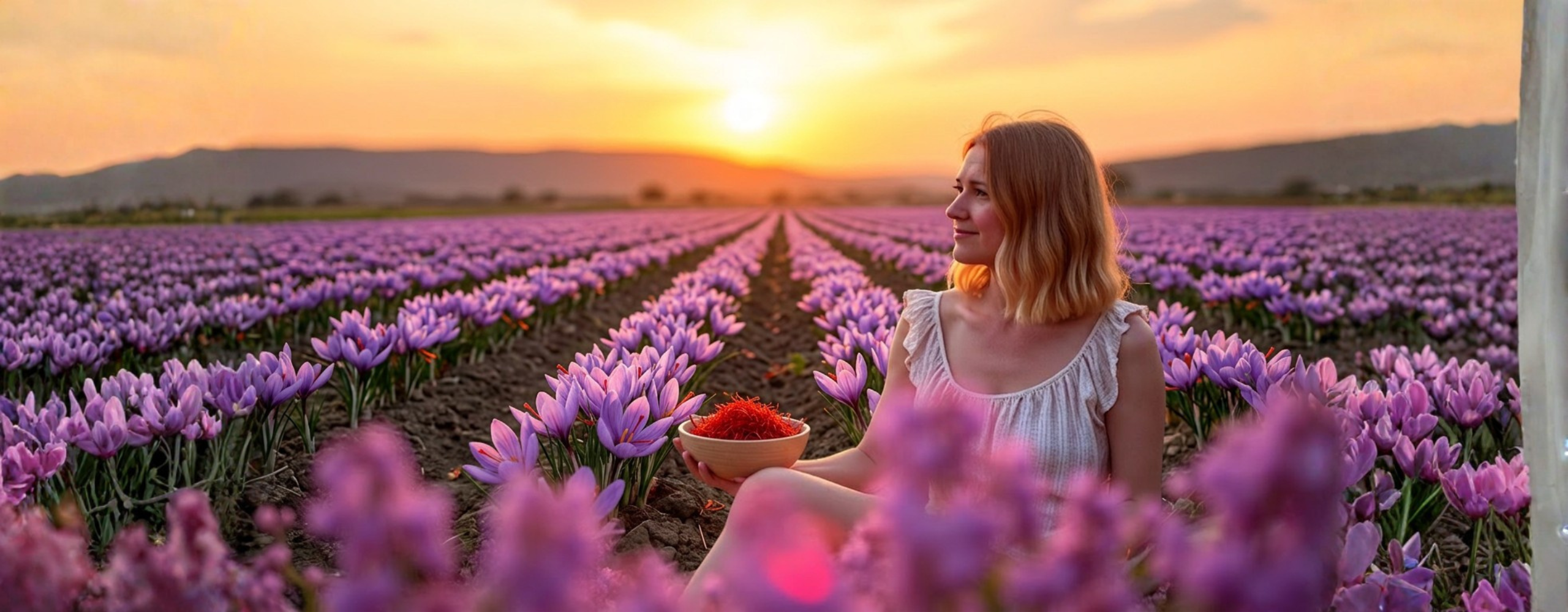
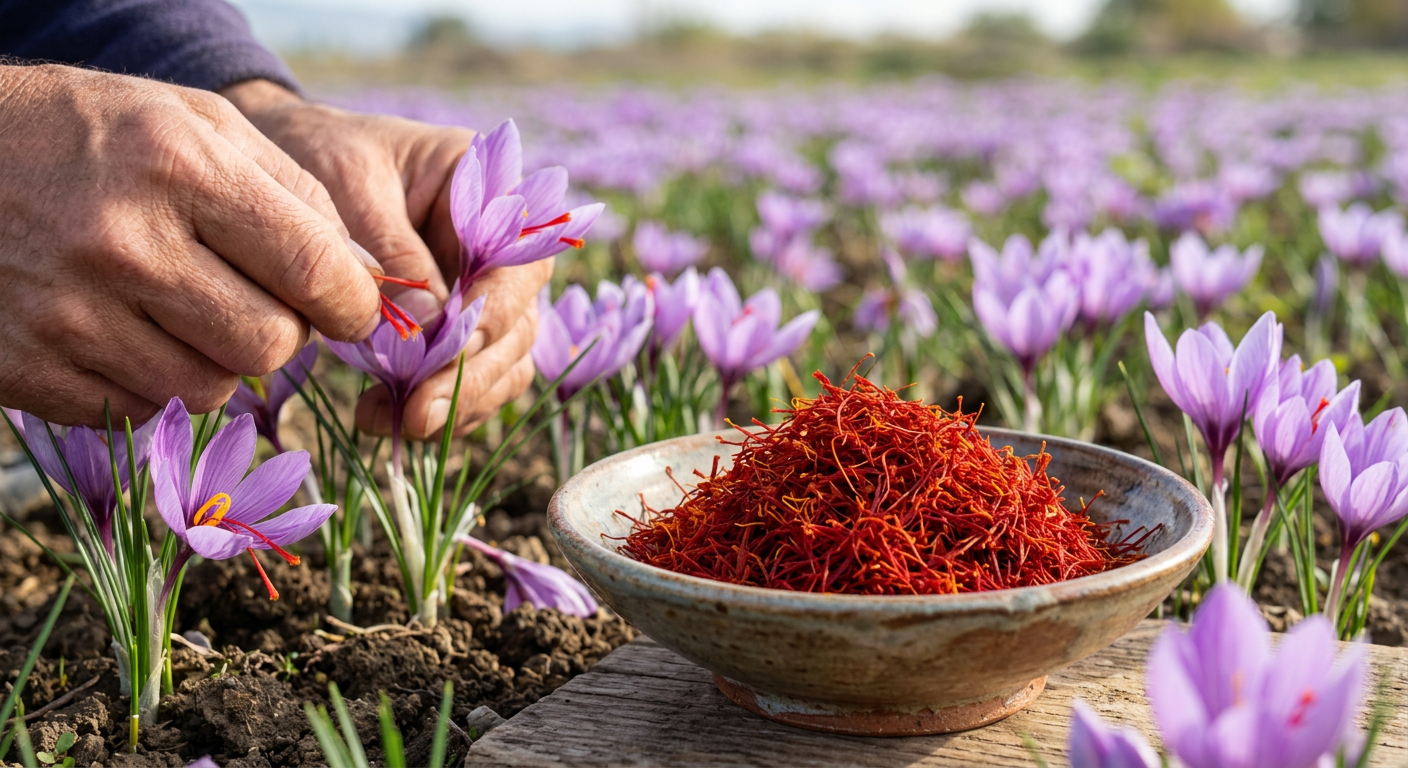
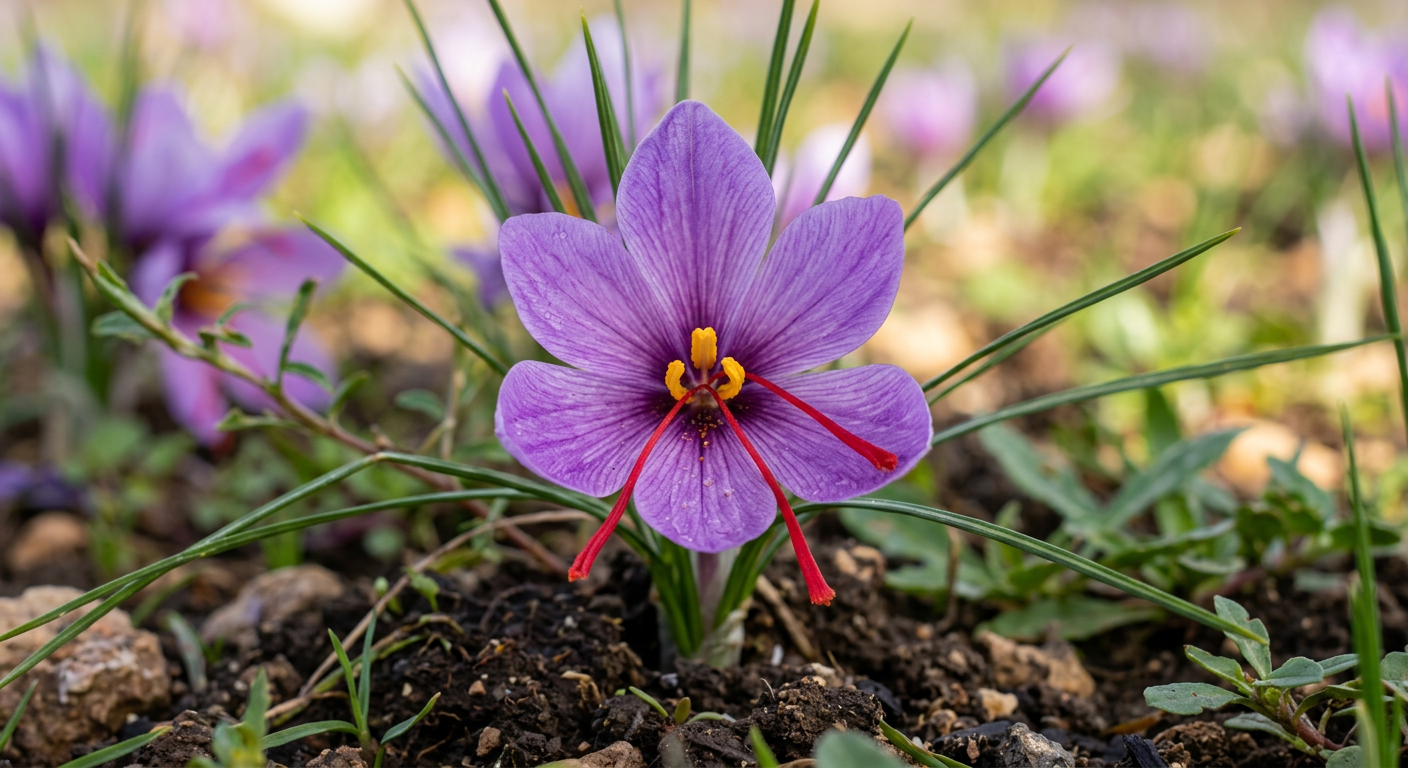
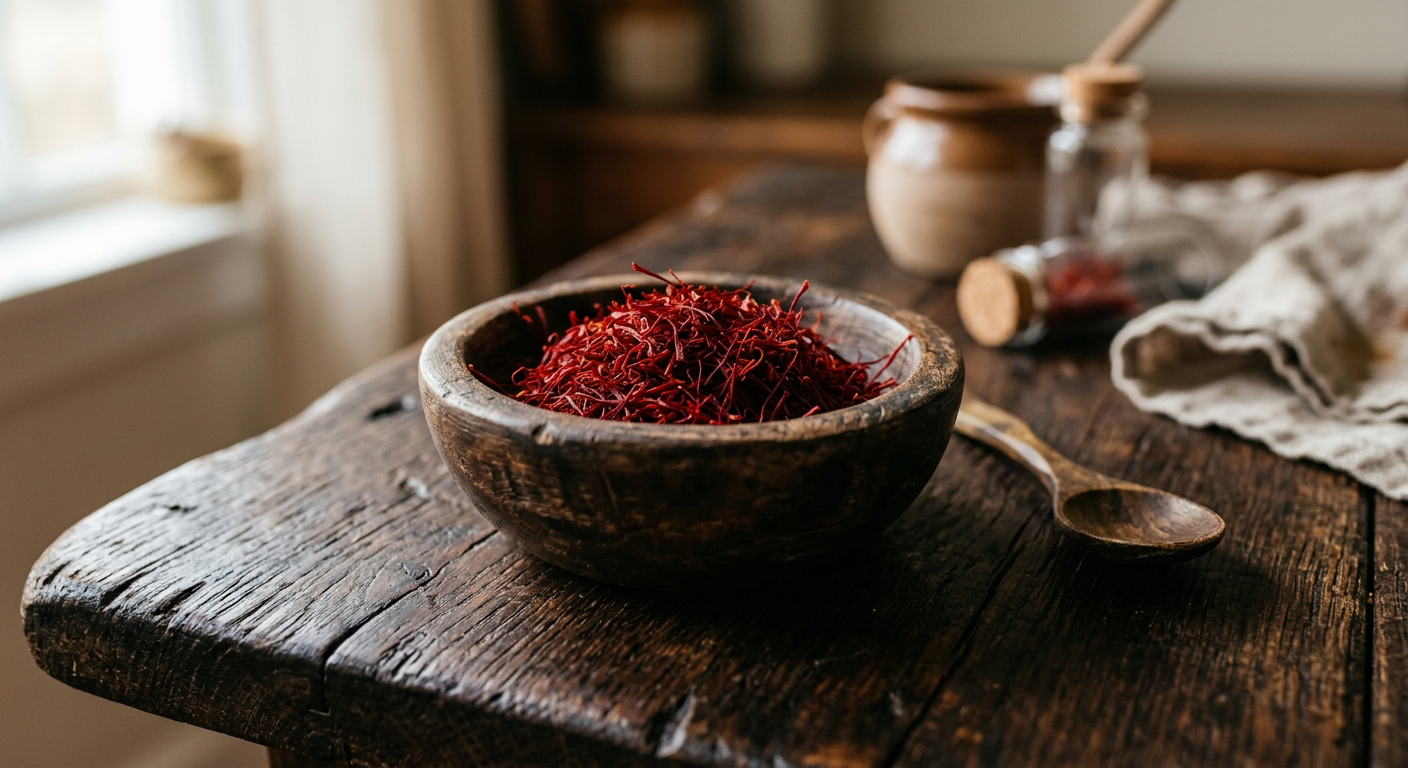
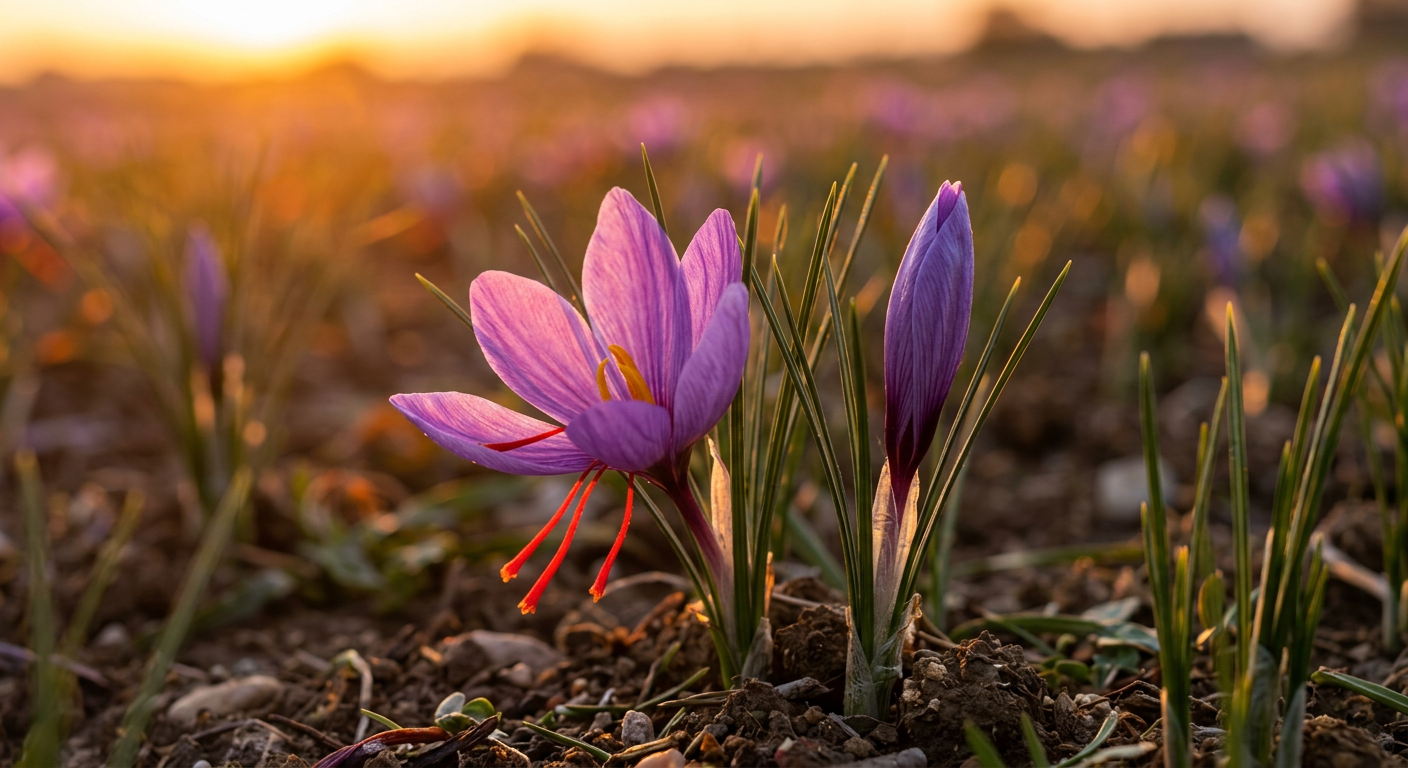
There are plants that grow silently and inconspicuously, and then there is saffron. The delicate purple flowers of Crocus sativus only open for a few hours in the fall – and hidden inside them are three red threads that are among the most precious substances in the world. One kilogram of real saffron requires the manual harvesting of around 150,000 flowers. That sounds like luxury, cuisine and exoticism. But what traditional medicine has known for thousands of years and modern research is increasingly confirming goes far beyond the spice cupboard: saffron is a medicinal plant of extraordinary depth.
A plant with a history
Saffron was already considered sacred in ancient Persia, Egypt and Greece. It was used for rituals, as a painkiller, recommended for women’s ailments and valued as a mood enhancer. Avicenna, the great Persian physician of the 11th century, described saffron in his Canon of Medicine as heart-strengthening, liver-supporting and mentally invigorating. All these applications sound less like folklore today when you look at what the active ingredients in saffron actually do in the body.
What is in these three red threads?
The main bioactive substances in saffron are crocin, crocetin, picrocrocin and safranal. Crocin and crocetin are responsible for the intense yellow coloration – and are also the main players in the antioxidant and neuroprotective effect. Safranal, the essential oil, gives saffron its unmistakable, slightly bitter scent – and has a direct effect on the nervous system. Picrocrocin is a precursor of safranal and also contributes to the bitter note and pharmacological activity.
This combination makes saffron something special: no single substance alone has as strong an effect as the natural interaction of all the ingredients – a principle known in naturopathy as synergistic action, which goes far beyond what isolated laboratory substances can achieve.
Saffron and the soul – more than just a mood enhancer
Perhaps the best researched effect of saffron is its effect on mental health. Several clinical studies – including randomized, controlled double-blind studies – show that saffron extract achieves an efficacy comparable to classic antidepressants (SSRIs such as fluoxetine or imipramine) for mild to moderate depression. And with a significantly more favorable side effect profile.
What happens in the body? Saffron inhibits the reuptake of serotonin, dopamine and noradrenaline – similar to classic antidepressants, but gentler and broader. It modulates GABA activity in the brain, which has a calming and anxiety-relieving effect. At the same time, it protects nerve cells from oxidative stress, which is regularly increased in chronic fatigue, burnout and depressive states.
From a psychosomatic perspective, this is particularly significant: depression is not just a question of neurotransmitters. It is often an expression of a deep exhaustion of the system – physically, emotionally and spiritually. Saffron works in all these layers. It gives the nervous system the opportunity to calm down again without numbing it. It illuminates – like the light it symbolizes.
Protecting the brain – saffron and cognition
Crocin and crocetin cross the blood-brain barrier and directly protect the neurons there. Studies show that saffron extract slows down the deterioration of cognitive functions – and initial research on Alzheimer’s patients provides impressive evidence of neuroprotective properties. Saffron inhibits the aggregation of beta-amyloid plaques, which are considered a central factor in the development of Alzheimer’s, and reduces neuroinflammatory processes.
An effect can also be seen in healthy people: concentration, memory and the ability to process new information can improve with saffron supplementation. This makes saffron an interesting companion in stressful phases of life – not as a miracle cure, but as gentle support for a brain that has to perform at its best every day.
The body benefits – inflammation, heart and eye
Chronic silent inflammation is one of the most common background factors in modern civilization diseases. Saffron has an anti-inflammatory effect in several ways: it inhibits pro-inflammatory cytokines such as TNF-α and IL-6, reduces oxidative stress in vascular walls and lowers LDL cholesterol levels while protecting HDL. This makes it a valuable companion for heart health.
The effect on the eyes is particularly remarkable: crocin appears to protect the photoreceptors of the retina. Initial studies on age-related macular degeneration show that daily saffron intake can stabilize or even improve visual acuity – a discovery that is being intensively researched further.
Saffron for women
Saffron has a long history in gynecology, and modern research confirms many of its ancient uses. Premenstrual symptoms – mood swings, irritability, sensitivity to pain – have been shown to be alleviated by saffron. Studies also show a positive influence on libido, both in women and men. For menopausal women, saffron can help to reduce hot flushes and strengthen emotional balance.
How to use it?
Studies usually use 20-30 mg of standardized saffron extract daily, divided into two doses. As a spice in the kitchen – in tea, risotto, golden milk – saffron is wonderful, but the therapeutic quantities can hardly be achieved with it. For a targeted effect, a high-quality, standardized extract is recommended.
Saffron is very well tolerated in normal quantities. In very high doses – from about 5 grams daily, i.e. far beyond therapeutic ranges – it can have a uterine stimulating effect. Pregnant women should therefore use therapeutic doses with caution and seek medical advice.
The treasure that wants to be protected
It’s early in the morning in fall. The air is still cool, the light thin and slanted. And this is exactly when the Crocus sativus opens its flower – for a few hours, no longer. Then it closes again. No midday, no spectators, no permanent presence. Just this one quiet moment at dawn, which is repeated three, maybe five days a year. Then the window is closed.
Inside him: the most precious thing he has.
You could read this plant as a symbol – for a way of life that seems almost forgotten in our time. The art of guarding one’s own treasure.
We live in a culture of permanent openness. Thoughts are shared in real time, feelings are posted, vulnerability is declared a virtue on stage. Showing yourself is seen as courageous, hiding yourself as weakness. And yet more and more people are experiencing a strange inner emptiness – not despite this openness, but because of it.
Because what happens if you are always open?
If everyone has access to your thoughts, your feelings, your most intimate emotions at all times, then they are no longer entirely yours. You don’t just share, you give away. And at some point, you look inside and find nothing that belongs only to you. No quiet space, no intact core, no place to which you alone have the key.
This is not a metaphor. It’s exhaustion. This is what I experience time and again in practice when someone says: I don’t even know how I feel anymore. Or: I tell everyone everything – and still don’t feel understood. Or: I have the feeling that I only exist when someone is watching.
And here it is worth taking a closer look. Because people who open up very deeply very quickly – who immediately tell everyone they meet about their wounds, fears and innermost feelings – rarely do so out of frivolity. There is usually something much more delicate behind it: Loneliness. The deep, often unconscious fear of being alone with what you carry inside you. The feeling that the heaviness becomes lighter when you express it. That you no longer have to bear what has built up inside all alone as soon as another person knows about it.
That is deeply human. And at the same time, it is exhausting – in the long run and on both sides. Because the relief that comes from sharing only lasts for a short time. Because the need behind it – to really be held, to really not be alone – cannot be satisfied by words alone. And because the body, which constantly lives in this openness, never really comes to rest. The nervous system remains activated. The inner center remains unprotected.
People who open up too deeply too quickly are no less protective because they are courageous. They often don’t protect themselves because they don’t know that their inner self is something that deserves protection. That not everything that lives inside you is meant for others. That secrets are not lies, but dignity. That you don’t have to share yourself in order to exist.
Crocus sativus knows this. It opens when the time is right. Not on demand.
And this is where saffron has an effect that goes beyond the biochemical – or perhaps better said: it touches something deeper through the biochemical. It relieves anxiety a little. It relaxes the nervous system, which is no longer able to distinguish between danger and security when on permanent alert. It alleviates that subliminal feeling of restlessness that drives so many people to keep reaching outwards – for reassurance, for connection, for the feeling of not being alone.
And then – and this is perhaps the most beautiful thing that can happen in this effect – something happens that many people experience for the first time in their lives: they feel how wonderful it is to be with themselves. Completely with themselves. With what lives inside them, without immediately passing it on. They discover their inner treasure not as a burden that needs to be shared, but as something precious that can be preserved. As a quiet space that belongs only to them.
This is not a retreat from the world. This is coming home to yourself.

Leave A Comment