


Protein and female strength –
Why women need more protein than they think
There is a widespread misconception that persists: Protein is for men, for muscles, for weight training. The implicit assumption is that women can get by with very little. But this image is not only outdated – it is actively detrimental to health. Because protein is much more than just muscle food. It is the foundation on which your entire body is built: your hormones, your skin, your immune system, your mood, your energy. And women in particular have a particularly high, often underestimated need.
What is protein anyway?
Protein consists of amino acids – the building blocks of life. Your body literally uses them for everything: it uses them to build enzymes, antibodies, neurotransmitters, connective tissue, hair, nails and, of course, muscles. Without sufficient protein, no system in your body can function optimally. A distinction is made between essential amino acids – which the body cannot produce itself and must be obtained from food – and non-essential amino acids, which the body can synthesize itself if necessary. This is precisely why not only the quantity of protein is crucial, but also its quality: a food with a complete amino acid profile that provides all essential amino acids is more valuable than one that contains only some of them.
How much protein do we really need?
The German Nutrition Society officially recommends 0.8 g of protein per kilogram of body weight per day. This is a minimum – a lower limit, not an ideal value. Recent research, particularly for women at different stages of life, suggests that 1.2 to 1.6 g per kilogram – or even more – is much more sensible. For a woman weighing 65 kg, that would be 78 to over 100 g of protein per day. The reality? Most women barely get half of that. In addition, the requirement increases significantly during certain phases of life – pregnancy, breastfeeding, menopause, phases of stress or illness. The blanket recommendation simply does not do justice to this diversity.
The special reasons why women need more protein
Hormone balance and cycle. Your sex hormones – oestrogen, progesterone, as well as thyroid hormones and cortisol – are formed from amino acids and fatty acids. A protein deficiency can disrupt hormonal rhythms, increase PMS, make your cycle irregular and impair fertility. Women who eat a low-calorie, low-protein diet often report cycle disorders – not a coincidence, but a direct biochemical consequence.
Maintain muscle mass – especially from the age of 30. With each decade of life, we naturally lose muscle mass – a process called sarcopenia. In women, this loss accelerates considerably from perimenopause onwards, as oestrogen plays a protective role for the muscles. Less muscle means a slower metabolism, less strength, poorer insulin sensitivity and an increased risk of falling in old age. Sufficient protein – combined with exercise – is the most effective strategy to counteract this.
Bone and connective tissue. Osteoporosis is largely a women’s disease: around 80 percent of those affected are female. While calcium is praised as the bone savior, it is often forgotten that collagen – the basic structure of bone tissue – is a protein. Similarly, ligaments, tendons, joints and skin are largely made up of collagen. Without sufficient protein, your body can neither build nor repair this tissue.
Skin, hair, nails. What you see on the outside is often a reflection of what is missing on the inside. Brittle nails, dull hair, dull skin – these are classic signs of a protein deficiency. Keratin and collagen are formed directly from amino acids. Those who consume more protein often notice a noticeable change after just a few weeks.
Mood, sleep and neurotransmitters. Your mood also depends on protein. Serotonin – the feel-good hormone – is formed from the amino acid tryptophan, dopamine from phenylalanine and tyrosine, and acetylcholine – crucial for memory and learning ability – from choline. Without these building blocks, your nervous system cannot produce enough neurotransmitters. Depression, poor sleep, listlessness and increased sensitivity to stress can simply be the result of a protein deficiency. Cognitive performance also suffers: Concentration problems, mental fog and a shortened attention span in the morning are often not a weakness of character – but neurochemistry.
Blood sugar and energy. Protein slows down gastric emptying and stabilizes blood sugar. If you eat a protein-rich meal, you won’t experience steep sugar peaks and troughs, but a steady supply of energy. The afternoon slump, the ravenous appetite after lunch, the irritability when food is too long in coming – all these are often signs of unstable blood sugar regulation, which is significantly more balanced with more protein.
Immune system and regeneration. Antibodies are proteins. Inflammation regulators are proteins. The enzyme cascades that your body activates during infections, injuries and stress are also proteins. An adequate protein supply is therefore also a form of immune care. Women who frequently fall ill, regenerate slowly or feel chronically exhausted should consider their own protein intake as one of their first levers.
Protein during the menopause – particularly important
The menopause is a phase in which the need for protein not only remains the same – it increases. And for several reasons that reinforce each other.
As oestrogen levels fall, the body loses one of its most important protective factors for muscle mass and bone density. Muscle loss accelerates noticeably, the basal metabolic rate drops and the body composition shifts towards more fatty tissue – even if weight remains the same. At the same time, the body’s ability to build up the same amount of muscle protein from a given amount of protein as in younger years decreases. Experts refer to this as “anabolic resistance”. This means that menopausal women not only need sufficient protein – they actively need more of it than before to achieve the same effect.
Bones are also particularly in need of protection during this phase. The rapid drop in oestrogen during the perimenopause and menopause significantly accelerates bone loss – and as collagen forms the basic structure of bone tissue, an adequate supply of protein is not an option here, but a real necessity.
In addition, there are the often underestimated neuronal and emotional changes of this phase of life: sleep disorders, mood swings, concentration problems, the feeling of mental fog. All of this is also linked to an altered neurotransmitter balance – and, as already described, this is directly dependent on the protein supply. Serotonin, dopamine, acetylcholine – they all need amino acids as a raw material.
The menopause is therefore perhaps the phase of life in which a conscious protein supply can make the biggest noticeable difference: for energy, body composition, bones, mood and mental clarity. Not as a miracle cure – but as a solid, daily foundation.
The stomach: the underestimated gateway to protein digestion
Before protein can even find its way into your cells, it must first pass through the stomach – and this is where the real work begins. The stomach produces hydrochloric acid (HCl) and the enzyme pepsin, which together break down the complex protein structures and break them down into smaller peptide chains. This step is no small feat: without sufficient stomach acid, protein remains largely undigested and cannot be completely broken down into its amino acids in the small intestine.
A weakened stomach – whether due to chronic stress, eating too quickly, frequent use of proton pump inhibitors or simply getting older – is therefore often a silent saboteur of the protein supply. So anyone showing signs of deficiency despite a high-protein diet should not only look at their intake, but also ask: Can my stomach process it at all?
Typical signs of low stomach acid production are a feeling of fullness after protein-rich meals, belching, bloating shortly after eating or the feeling that the food is “like a stone in your stomach”. These are all invitations to support stomach health first – before simply piling more protein onto your plate.
(More information can also be found in my blog article: Stomach pain – causes and treatment)
First the intestinal environment, then more protein
If you want to increase your protein intake, you should first take an important look at your gut. Because not every intestinal environment is ready for more protein – and in some situations an abrupt increase can even be counterproductive.
If the bacterial balance in the gut has become imbalanced – i.e. if so-called putrefactive, i.e. putrefactive bacteria such as clostridia get out of hand – then it is precisely these germs that prefer to feed on protein. More protein in a dysbiotic gut simply means more food for the wrong inhabitants. This can lead to increased gas formation, flatulence, a foul smell in the stool and systemic stress.
The consequence of this is not to do without protein – but to lay the foundations first. This means actively supporting the microbiome, building up protective bacterial strains and giving the gut time to find its balance. If you notice that your digestive system rebels when you increase your protein intake – with bloating, pressure, unpleasant stool odor or general discomfort – then this is a valuable indication that your stomach and intestines need attention first. A healthy microbiome with a stable community of protective bacteria can utilize protein efficiently. A tilted environment cannot. As is so often the case: not against the body, but with it.
(Related blog articles: Clostridia – the most common cause of flatulence and diarrhea; Intestinal cleansing in 7 steps )
Is protein destroyed by cooking? The myth cleared up
A question that concerns many people: Does protein lose its value when heated? The short answer is no – and in some respects the opposite is true.
Protein denatures during cooking, frying or baking – in other words, its spatial folding structure changes. This can be seen, for example, in an egg: liquid becomes solid, and this process cannot be reversed. But what remains are the amino acids themselves – the actual nutrient building blocks. The sequence of the amino acid chain, the so-called primary structure, is completely preserved by heat. What’s more, denatured protein is often easier for the digestive enzymes in the small intestine to access than raw protein – the structure is already pre-digested, similar to what stomach acid would do later anyway. Cooking and stomach chemistry basically do the same job – just in a different order.
Interesting in this context: proteins are also denatured in the stomach itself by hydrochloric acid before the enzyme pepsin breaks them down further. Denaturation is therefore not a loss of quality – it is a necessary step in the digestive process.
Where caution is actually required: when searing at very high temperatures and especially when charring meat. Here, the so-called Maillard reaction can produce heterocyclic amines – compounds that are said to have carcinogenic potential. It is therefore not the protein itself that is problematic, but the way it is prepared. Gently cooked, steamed or moderately fried protein is wholesome and highly digestible.
Protein and cancer – a differentiated view
The rumor that a high-protein diet is generally cancer-promoting persists. However, a closer look at the research shows a much more nuanced picture.
A comprehensive umbrella review published by the German Nutrition Society in 2024, which analyzed systematic studies up to January 2024, concluded that a higher total protein intake is not associated with an increased risk of colorectal, breast, prostate, ovarian or pancreatic cancer. What the research actually shows, however, is that the source is crucial. Studies have shown an association between red and processed meat – sausages, cured meat or meat prepared at very high temperatures – and an increased risk of bowel cancer, presumably due to carcinogens such as nitrites and polycyclic aromatic hydrocarbons. Plant-based protein sources do not show this association – recent research even suggests that a high quality and variety of protein sources may be associated with a reduced risk of bowel cancer.
So the message is not “less protein”, but “smarter sources”. If you eat a varied diet, avoid processed meat and regularly integrate plant-based proteins, you don’t need to worry.
Psychosomatic dimension: Why does protein belong to “the men”?
It is worth pausing for a moment to consider something that appears cultural at first glance – but is deeply inscribed in collective body images: protein is associated with masculinity almost worldwide and across cultures. Flesh, power, strength, structure – these are male-coded concepts. Women, on the other hand, are supposed to be light, need little and eat modestly. The salad, not the steak.
Yet biochemically this is simply absurd. Amino acids are the building blocks of life itself – not of male life, but of life as such. They form hormones, neurotransmitters, immune cells, skin, blood and connective tissue. They are the substance from which a body is created in the first place – and this applies at least as much to the female body as it does to the male. In some phases, such as pregnancy, breastfeeding or the hormonal restructuring processes of the perimenopause, even more so.
The question that arises here is not a purely nutritional one: Why has an entire culture so largely denied women the right to substance? Why is it taken for granted that men get full and women restrict themselves? What does this say about whose strength and vitality is considered worth protecting?
That sounds big – and it is. Because it’s not just on the plate. It sits in the conviction of many women that they “don’t need that much”. That it’s enough if everyone else is provided for. That substance – both literally and figuratively – is more for others.
In this light, consciously eating enough food, treating yourself to protein, giving your body building blocks is not a banal nutritional tip. It is a small, daily act of reclamation: I am worthy of being nourished. My strength, my vitality, my substance – that’s what counts.
Protein sources and supplementation – what’s important
It is not only the quantity, but above all the source of the protein that makes the difference. Plant proteins are generally considered to be the gentler choice – in addition to amino acids, they often also provide fiber and secondary plant substances and do not burden the intestines or metabolism to the same extent as animal sources can. This does not mean that animal protein should be avoided in principle – but as described above, meat should not be prepared at very high temperatures and, above all, should not be burnt or charred.
A question that concerns many people: Can you meet your protein requirements purely through your diet? To be honest, this is a real challenge for many people in everyday life. If you aim for 80 to 100 g of protein a day, you have to eat very consciously and consistently – this is not always possible, especially during stressful periods. If you therefore turn to supplements, we recommend that you choose plant-based protein supplements rather than those based on milk protein. Whey protein, casein and other cow’s milk proteins are often difficult for the human body to digest, put a strain on the intestines and can promote silent inflammatory processes in many people – even those who would not consider themselves lactose intolerant. Plant-based alternatives such as pea protein, hemp protein or rice protein are generally much better tolerated.
Ultimately, it is a very personal decision as to whether you want to cover your protein requirements through your diet, supplement or combine the two. One good option is to simply try it out for a while – integrate a protein supplement into your daily routine for four to six weeks and honestly observe how you feel. More energy? Better regeneration? More stable mood? Your own body often provides the clearest answer.
Good sources of protein at a glance
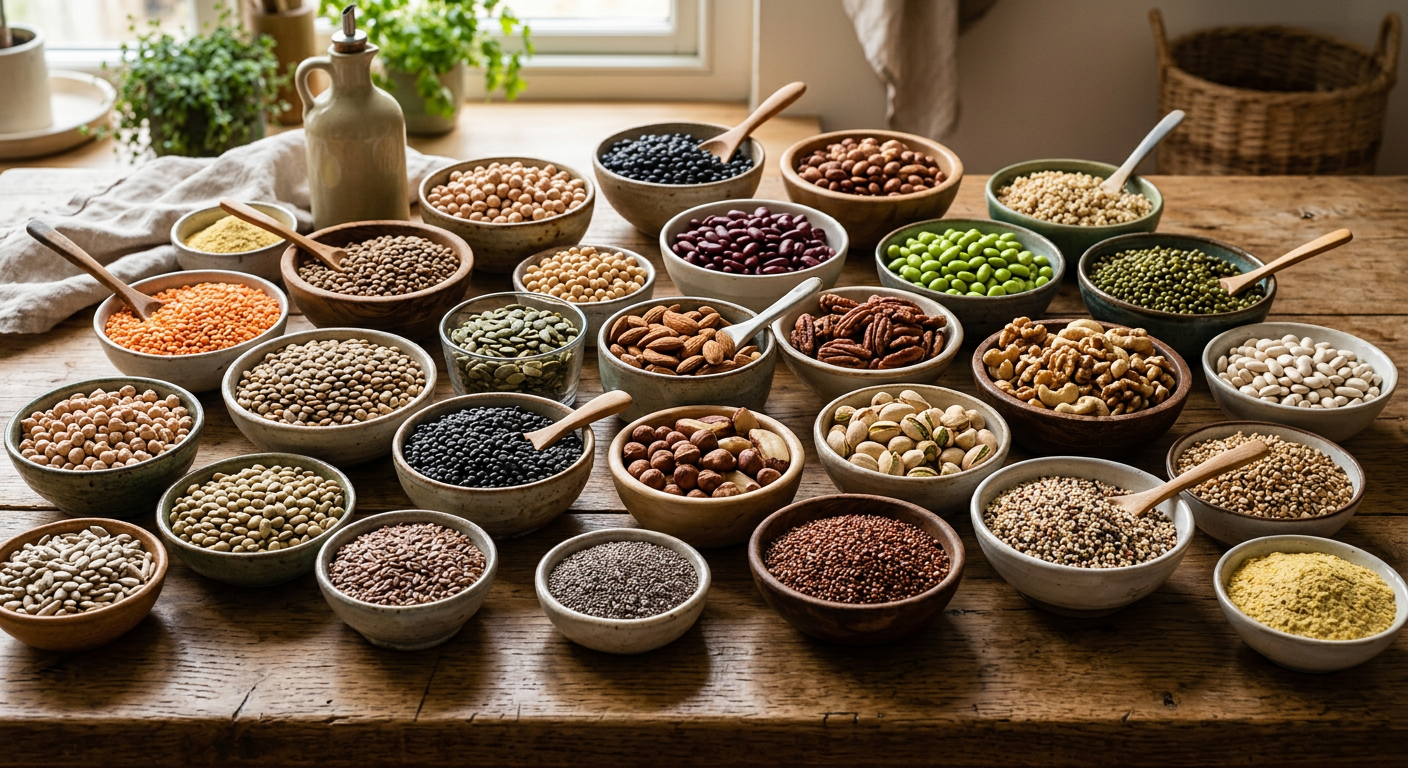
Plant sources
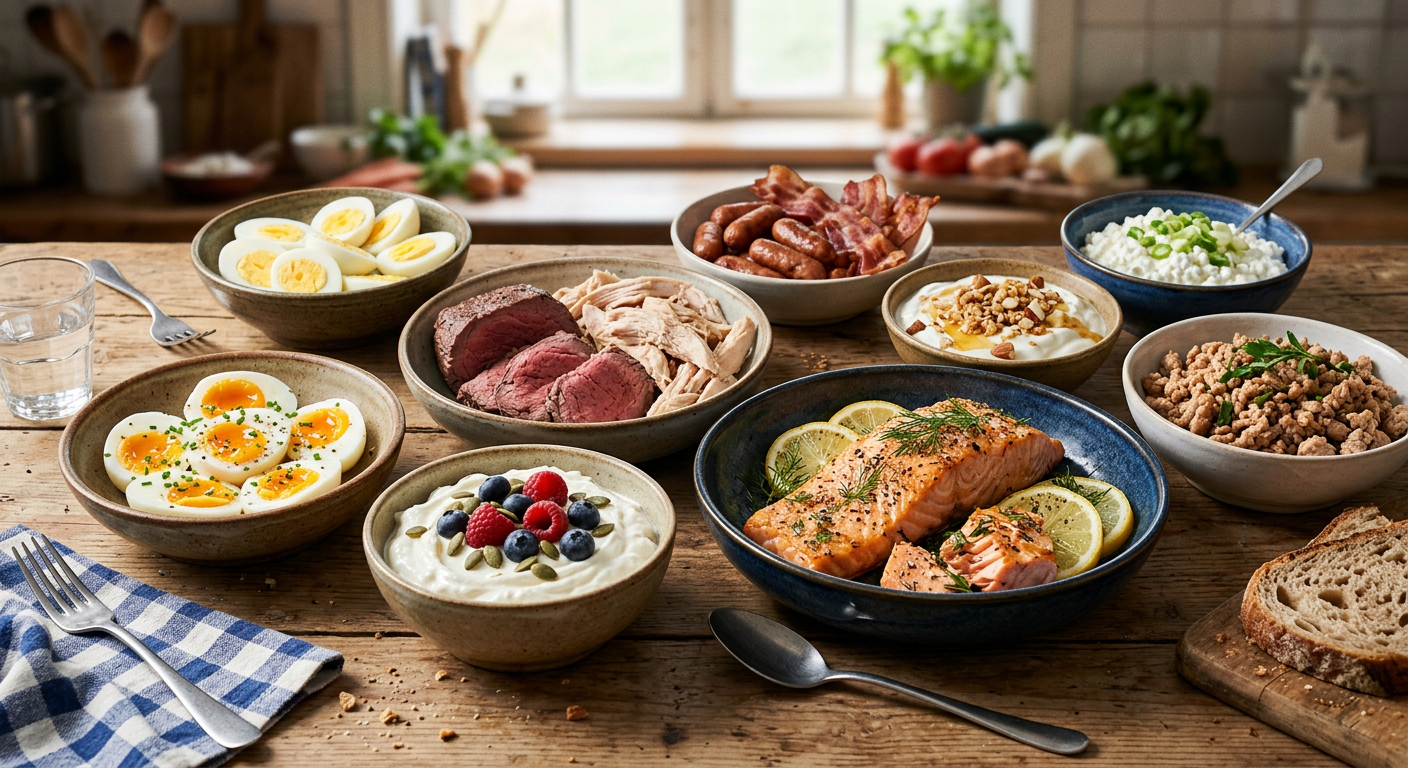
Animal sources
One last thought
It’s not about perfection and it’s not about counting every gram. It’s about taking the topic of protein from the corner of “sports nutrition” to the center of your daily self-care. Your body rebuilds itself every day – from what you give it. Give it substance.
As always, every body is unique. If you are unsure what your personal needs are, it is worth taking a look at your blood values and talking to a specialist who sees you as a whole.

Leave A Comment