


Aloe vera – hype or real help?
Why so many swear by them.
Hardly any other plant is as ubiquitous in pharmacies, drugstores and naturopathic practices as aloe vera. It adorns windowsills, is found in hair care products, nutritional supplements and wound creams – and is often stylized as an all-purpose miracle plant. But what is really behind this fleshy desert plant with its prickly leaves?
This article takes you on a journey through the gut, skin and immune system – and also touches on the psychosomatic space that this plant can symbolically touch.
From the desert to the world – origin and history
Aloe vera (botanical name: Aloe barbadensis Miller) belongs to the Asphodelaceae family and originally comes from the Arabian Peninsula. Even the ancient Egyptians called it the “plant of immortality” and used its gel for skin and digestive complaints. In Ayurvedic medicine, it is known as “Kumari” – “the young girl” – a reference to its rejuvenating, nourishing quality. Arab healers and healers used its juice to treat fevers and wound infections. Today, aloe vera is cultivated worldwide, mainly in Mexico, the Caribbean and parts of Africa.
What many people don’t know: A distinction is made between two very different parts of the plant. The clear gel inside the leaves and the yellow-bitter latex sap directly under the leaf skin have completely different ingredients and active profiles – and should never be lumped together.

What’s inside? The most important ingredients
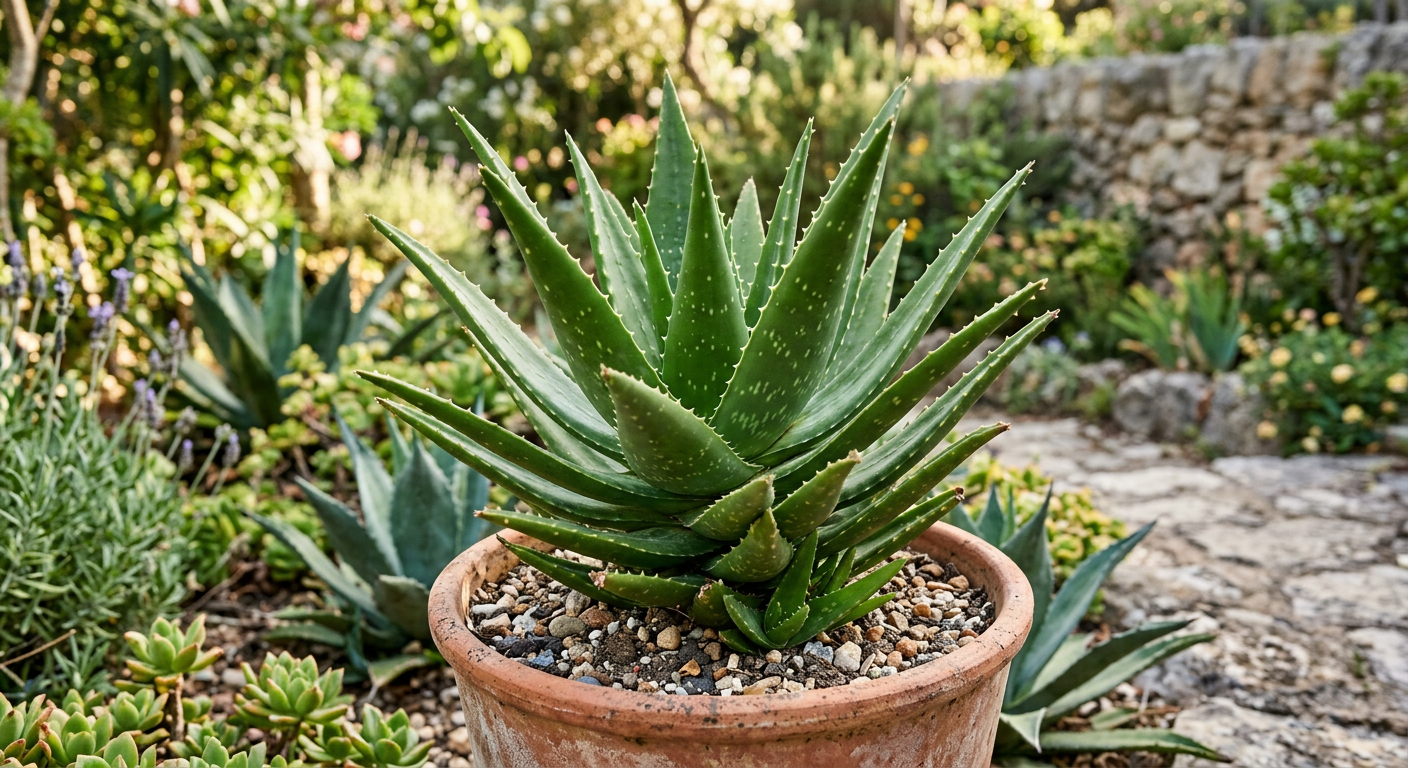
Aloe vera gel is a biochemical mixture of many substances. It contains acemannan, a long-chain polysaccharide, which is considered to be one of the most effective ingredients. It also contains vitamins (A, C, E, B-complex), minerals such as magnesium, potassium and zinc, amino acids, enzymes (including amylase and lipase), salicylates and various flavonoids and phenolic compounds. This combination explains the broad spectrum of effects – even if isolated studies on individual substances cannot always be applied to the gel as a whole.
What really works – the proven side of aloe vera
Before we delve into the individual areas of application, it’s worth getting an overview: Where does aloe vera have its firm, scientifically well-supported place – and how is it convincing not only in its promise, but in reality?
Aloe vera has the strongest evidence for external use. Wound healing, moisture retention and anti-inflammatory effects on the skin are not only traditionally handed down, but have also been proven in numerous clinical studies. It has a consistent and reproducible effect, particularly on sunburn, minor first-degree burns and irritated skin.
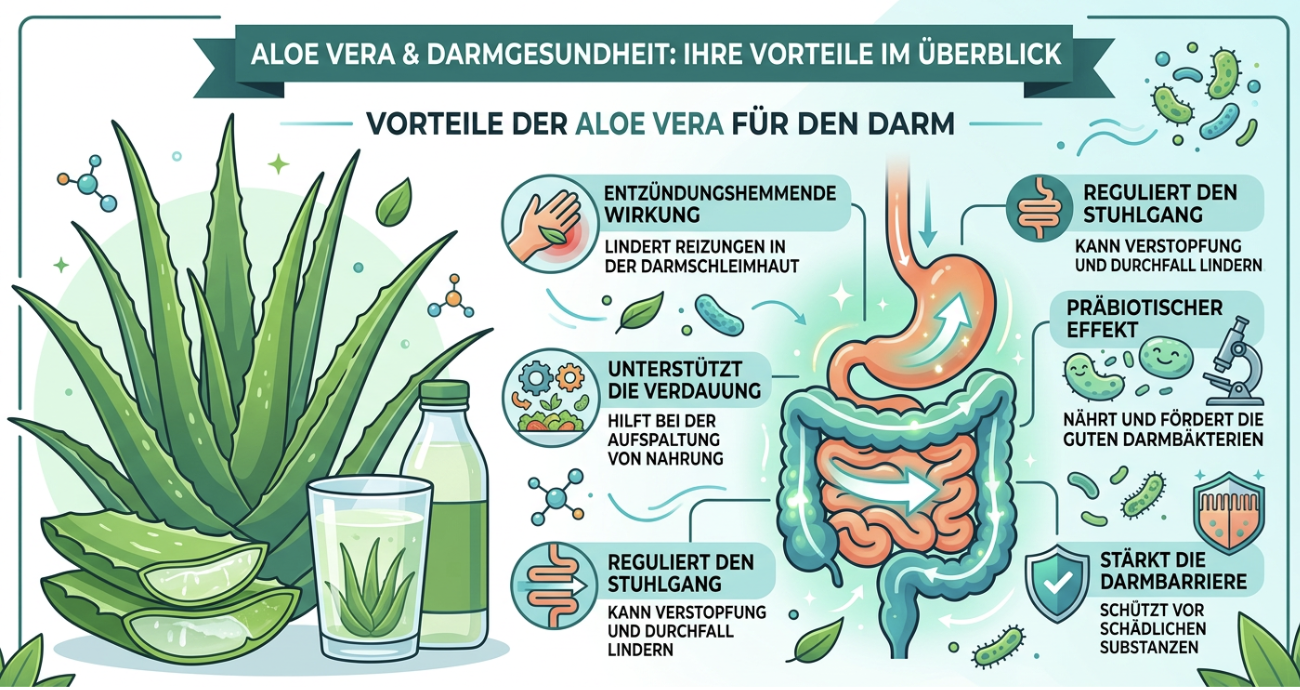
In the area of intestine and mucosa, there is increasing evidence that the decolorized, aloin-free gel can modulate inflammatory processes in the intestinal area and support the mucosal barrier. Studies in Crohn’s disease and ulcerative colitis are providing initial encouraging indications – with the caveat that research is not yet complete.
On an immunological level, acemannan has a moderating effect on macrophages and cytokines – no excessive fueling, but a fine balance. This makes aloe vera an interesting companion in the context of silent inflammation. To put it simply: the immune system is not a switch that should simply be turned up – it needs balance above all. Acemannan seems to support exactly that: It helps the immune system to stay alert without tipping over into a permanent state of over-excitement. This is particularly relevant for people whose bodies are in a state of chronic, quiet inflammation – that background noise that does not always manifest itself in clear symptoms, but saps strength and vitality in the long term.
And finally: as a prebiotic support for the intestinal flora, acemannan is gaining increasing attention in microbiome research – a young but promising field. Prebiotic means that acemannan is not digested by the body itself, but serves as food for the beneficial intestinal bacteria. It therefore promotes the growth and activity of those microorganisms that support our health – comparable to fertilizing a garden soil so that the beneficial can thrive. At a time when the importance of the microbiome for the immune system, mood and metabolism is becoming increasingly clear, this is no small matter.
Aloe vera and the gut – with caution and discernment
When people turn to aloe preparations, the focus is often on the intestines – be it irritable bowel syndrome, chronic inflammatory conditions or a bloated stomach. And here it is worth taking a differentiated look.
The gel – i.e. the decolored, aloin-free interior of the leaves – can soothe the intestinal mucosa, support the so-called intestinal barrier function (i.e. the protective layer of the intestine that prevents unwanted substances from passing from the intestine into the blood) and modulate inflammatory processes in the intestinal area – i.e. gently regulate and dampen them without overstraining the intestine. Acemannan appears to play a key role in this: It has a protective effect on the mucosal cells that form the inner lining of the intestine, promotes a healthy composition of the intestinal flora – the trillions of microorganisms that live in our intestines and significantly influence our health – and has prebiotic properties, meaning it serves as food for the beneficial intestinal bacteria.
The situation is different with aloe latex, the bitter yellow juice from the outer layer of the leaves. It contains so-called anthraquinones, especially aloin – these are natural plant substances that have a strong laxative effect and stimulate the intestines to contract. In the past, they were often used in laxatives; regular use is now considered critical. The European Food Safety Authority (EFSA) has not been able to define a safe daily dose, as animal studies have shown evidence of genotoxic effects, i.e. potentially damaging to the genome. Aloe juice containing aloin should therefore really only be taken for short periods and under expert supervision. Internal intake is not suitable during pregnancy.
For daily use, we recommend: aloe vera juice from a certified source, decolored (aloin-free) and of food quality. If you have a sensitive gut or irritated mucous membrane, you can drink 30-50 ml on an empty stomach in the morning – and observe how your stomach reacts.
The skin and mucous membranes – where aloe vera is most at home
For no other application is the study situation as clear as for external use. Aloe vera has been shown to promote wound healing, retain moisture and reduce inflammation on the skin. The polysaccharides it contains form a protective film on the surface of the skin, enzymes such as bradykininase inhibit inflammatory mediators and salicylates have a mild antiseptic effect.
The effect on sunburn is particularly well documented: the gel cools, relieves pain and accelerates skin regeneration. It has a similar effect on minor first-degree burns, abrasions and dry, flaky skin. It also has anti-inflammatory effects on acne and sensitive skin – without drying out the skin.
For people with neurodermatitis or psoriasis, aloe vera can be a useful complementary measure – as a soothing, moisturizing layer without irritating fragrances. The following applies here: use pure gel without alcohol or preservatives, ideally directly from the fresh plant or from a high-quality finished product with a high aloe content.
A small but important tip for women’s health: in the hormonally sensitive area around the menstrual cycle – when the skin is more reactive and sensitive in the premenstrual phase – aloe gel can be particularly beneficial as a gentle external care product. Some women report that they avoid using richer, oil-based creams during this phase and rely on the cool, light gel instead.
Immune system and inflammation – what research says
Acemannan, the heart of aloe gel, is no longer unknown in immunological research – i.e. the science that deals with our immune system. It activates macrophages (these are specialized immune cells that seek out foreign bodies and pathogens and render them harmless, the “cleaners” of our immune system, so to speak), stimulates the production of cytokines such as interleukin-1 and TNF-alpha (cytokines are messenger substances, which immune cells use to communicate with each other and coordinate inflammatory reactions) and appears to modulate the non-specific immune response – i.e. the body’s first, general defense reaction to a stimulus – i.e. to finely regulate it without tipping over into an excessive reaction. This is an interesting balance: not a simple firing up of the immune system, but rather a clever balancing.
In the context of silent inflammation (silent inflammation) – i.e. those subliminal, chronic inflammatory conditions that do not manifest themselves as acute redness or swelling, but as a permanent, quiet background noise in the body that drains health and vitality in the long term – aloe vera is an interesting companion. It intervenes in several ways: via the intestinal mucosa, via antioxidant ingredients (i.e. substances that neutralize so-called free radicals – aggressive molecules that attack body cells and can fuel inflammatory processes) and via a direct modulating, i.e. regulating effect on inflammatory markers. So if you are working on your gut health and silent inflammatory processes at the same time, you can integrate aloe vera as a supporting element in a more comprehensive approach.
One more thought on women’s health: Inflammation markers – measured values in the blood that indicate the extent to which inflammatory processes are active in the body – and immune activity fluctuate during the menstrual cycle. In the luteal phase – i.e. the second half of the cycle after ovulation – certain inflammatory parameters increase slightly, which can exacerbate symptoms in sensitive women. Aloe vera can have a supportive effect here thanks to its anti-inflammatory properties, both internally and externally.
Quality and product knowledge – what you should consider when buying
The market for aloe products is huge and the differences in quality are considerable. For internal use, look out for products that carry the IASC (International Aloe Science Council) seal or at least have a certified aloe content of less than 10 ppm. The aloe vera content in drinks is often alarmingly low – some products consist of 90% water with a barely measurable gel content.
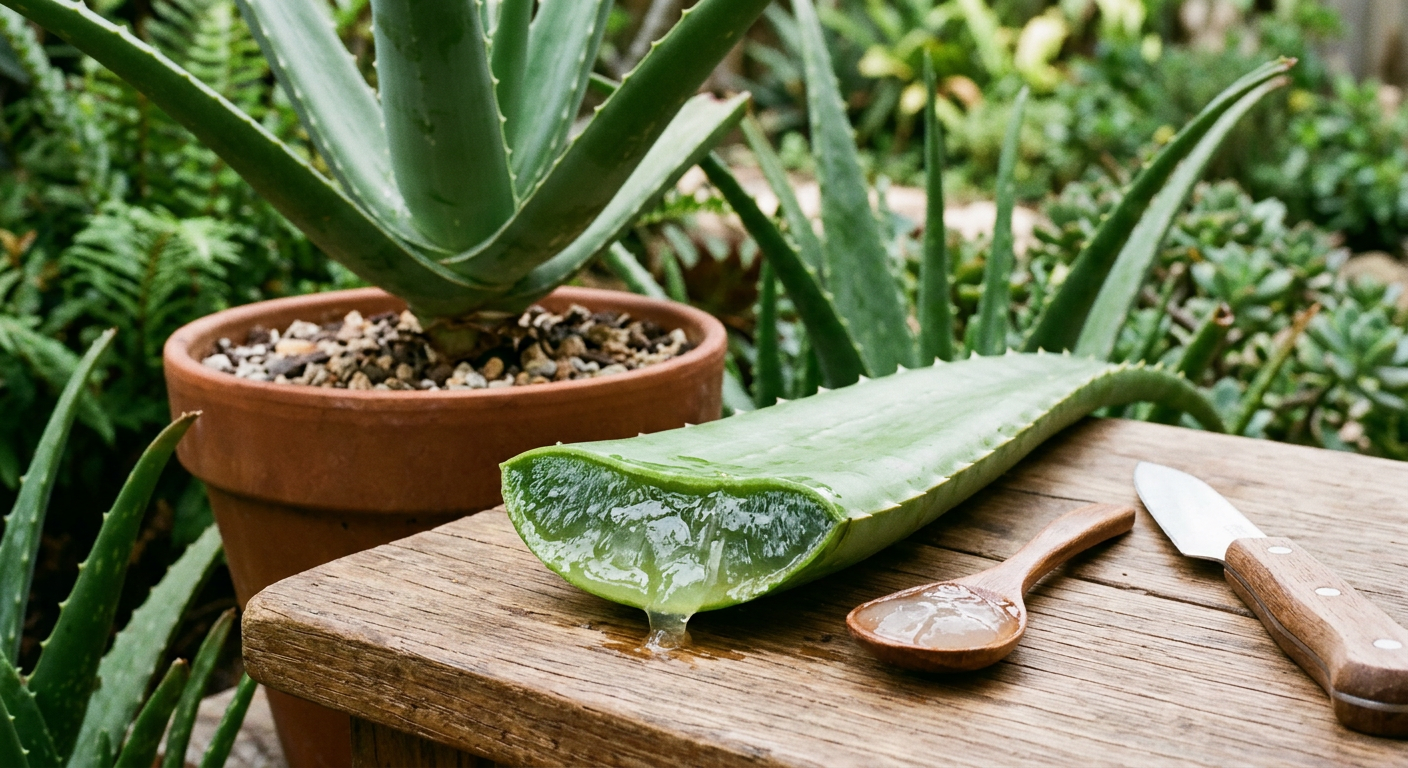
For external use: the fewer additives, the better. Pure aloe gel without alcohol, without fragrances and with an aloe content of at least 95% is the most valuable for the skin. If you have your own aloe plant in a pot, you can use the fresh gel directly from a cut leaf – simply cut it open and apply the clear gel. Avoid the outer layer and the yellow sap.
Psychosomatic view – what aloe vera touches symbolically
Aloe vera is a desert plant – it survives extreme water shortages, heat and drought by storing liquid inside and providing prickly protection on the outside, which is soft and nourishing on the inside. This imagery is hardly coincidental. And anyone who takes psychosomatics – the interaction between soul and body – seriously as a source of knowledge will find a number of things in this plant that also appear in human experience.
The skin is our outermost interface with the world – it separates the inside from the outside, protects and perceives at the same time. In psychosomatics, it is regarded as a mirror of our innermost states. No organ reacts as directly to emotional stress, to the feeling of being exposed or overwhelmed, as the skin. People who repeatedly suffer from skin problems – be it atopic dermatitis, acne, redness or chronic itching – often have a history of tensions between demarcation and being touched. Where can I show myself? Where do I need protection? How much closeness can I stand before it burns? The skin sometimes asks these questions louder than the mind.
If it itches, reddens, becomes inflamed – you can also ask: Where does someone feel rubbed, too thin, too exposed? Where is the protective framework that allows withdrawal missing? Aloe vera, with its cooling, soothing, enveloping quality, strikes just the right note – not as a magical solution, but as a gentle support that signals to the body: It can be cooler, calmer, more protected.
The intestine often reflects the undigested – and that doesn’t just mean food. The gut is closely connected to the nervous system; it is even referred to as the “second brain” because it has millions of nerve cells and is in constant dialog with the brain. Stress, grief, anxiety, unresolved conflicts – all of these leave their mark on the gut. An irritable bowel syndrome with cramps and restlessness, a mucous membrane that does not come to rest, can be an expression of the nervous system being under constant stress, that too much has been “swallowed” that could not really be digested. Aloe vera works here on several levels at the same time: it physically touches the mucous membrane, cools and nourishes – and perhaps also symbolically helps to invite a little more gentleness into our inner dealings with ourselves.
And then there is the immune system – the system that decides what is considered foreign and must be fought and what is recognized as one’s own. Chronic inflammation, overreactions and autoimmune disorders – i.e. diseases in which the immune system inadvertently attacks the body’s own tissue – often have a psychosomatic dimension. The question “What am I attacking in myself?” or “Where do I no longer recognize myself as good enough?” is not a nice metaphor, but a serious therapeutic approach that is always fruitful in practice.
Aloe vera does not draw water outwards, but binds it internally – a silent image of resilience: not carrying everything outwards, but not drying out either. Prickly on the outside, nourishing on the inside. This plant keeps itself alive under adverse conditions without hardening. Perhaps this is also an invitation to ask yourself: where would I like to have more of this quality myself – to protect without closing up, to nourish without losing, to be resistant without becoming rigid?
Practical application tips
Internally as juice: 30-50 ml of decolorized, aloin-free aloe vera juice in the morning on an empty stomach. Useful for accompanying intestinal support over 4-8 weeks. Buy quality products, pay attention to the aloin content (below 10 ppm). Do not use during pregnancy, breastfeeding or in the acute phase of inflammatory bowel diseases without prior consultation.
Externally on the skin: Apply fresh gel directly from the plant or pure ready-to-use gel (at least 95% aloe) to affected areas of skin. Cools sunburn, soothes irritation and cares for dry skin. Also ideal as an after-sun treatment.
As a plant in a pot: Aloe vera is easy to care for, needs little water and plenty of light. If necessary, a leaf can be cut off and used directly. The gel will keep for a few days in the fridge.
Finally – a loving conclusion
As always in naturopathy, there is no one plant that fits all. Listen to your body, work with a qualified therapist if you are not yet confident enough in yourself, and let this little prickly plant inspire you a little – to patience, resilience and the art of nurturing yourself.

Leave A Comment